
Is an Ubud Bike Tour Mostly Downhill? What to Expect
It depends on the route. An Ubud bike tour is not automatically a downhill ride, and “downhill” does not mean you can stop pedalling and let the bike take you all the way.
Before booking, check how much of the route is downhill, flat, or uphill. You should also know what the road surface is like and how confidently you need to use the brakes.
Our countryside cycling experience covers approximately 10 kilometres over two hours, including stops. We can discuss a shorter route, and vehicle support is available at suitable meeting points if someone gets tired.
Here’s what to consider when choosing a ride that suits you.
is an Ubud bike tour mostly downhill? Does Downhill Mean Easy?
Downhill cycling can reduce the effort needed to pedal, but you still need to control the bike.
You must be able to manage your speed, steer through turns, and brake smoothly. This matters particularly if you haven’t cycled recently or usually ride only on flat paths.
A gentle descent may feel comfortable. A steeper or longer descent can require more concentration.
That’s why we recommend asking about the actual route rather than choosing a tour simply because its title says “downhill”.
The right ride should match both your stamina and your confidence handling a bike.
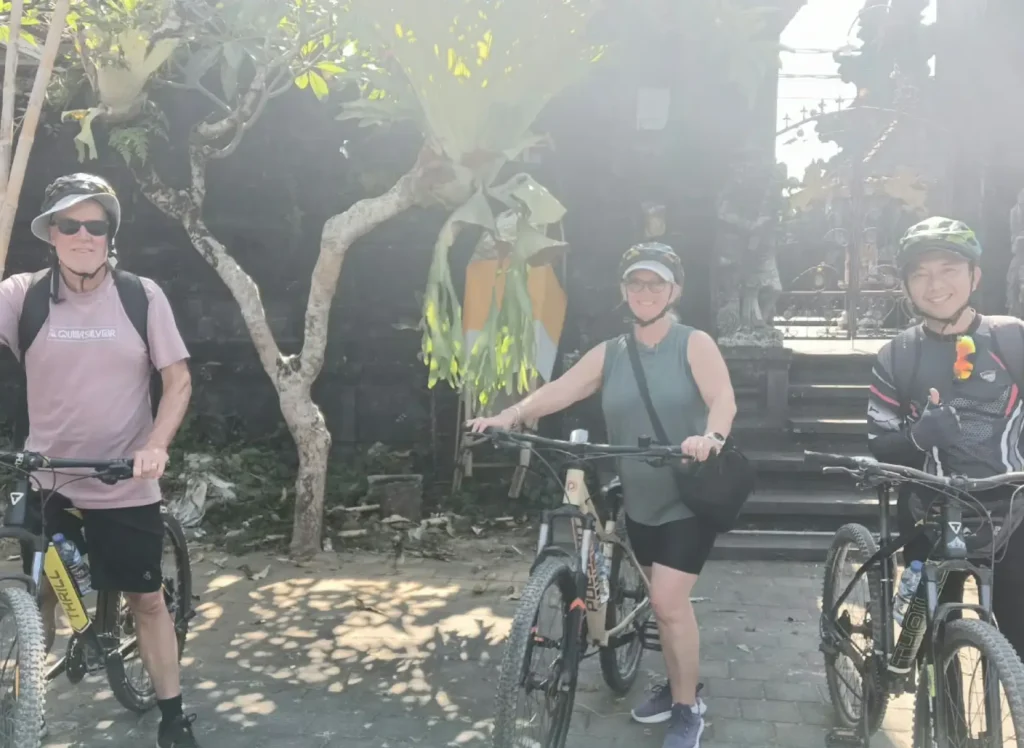
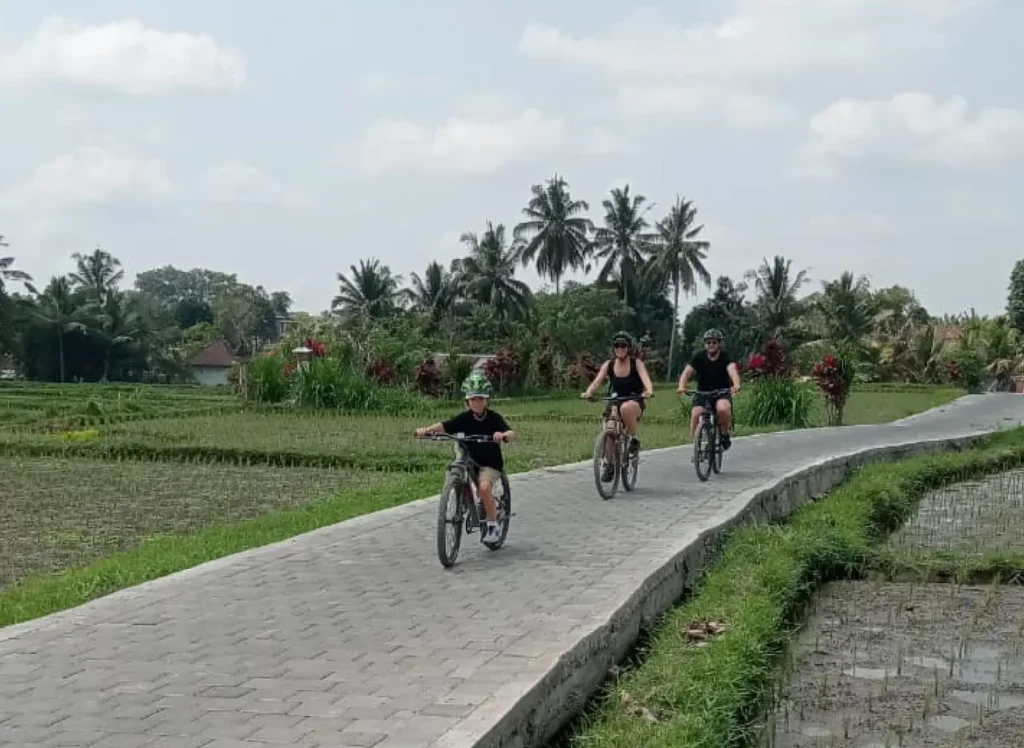
Will You Need to Pedal?
Yes, expect to pedal during your ride.
Even a route with downhill sections can include flat ground and short uphill stretches. You may also need to pedal after stopping or when the road levels out.
Don’t arrive expecting to coast through the whole experience. Think of it as a countryside bike ride with changing sections and opportunities to rest.
If uphill cycling is your main concern, tell us before booking. We can explain the planned route and discuss a shorter option.
Knowing what to expect helps you choose comfortably instead of discovering halfway through that the ride is different from what you imagined.
What Should You Ask About the Route?
Ask questions that help you picture the ride:
- Are the descents gentle or steep?
- Are there uphill sections?
- What surfaces will we ride on?
- Will we use roads with local traffic?
- Can we shorten the route?
- Where can the support vehicle meet us?
These details are more useful than a general description such as “easy cycling”.
You don’t need technical knowledge to ask. Explain what you’re comfortable doing and what concerns you.
For example, “I can cycle confidently on flat ground, but I’m nervous on long descents” gives us a clear starting point.
Do You Need Cycling Experience?
You don’t need to be a regular cyclist, but you should feel comfortable controlling a bike independently.
That means balancing, starting, steering, braking, and stopping when asked. You also need to listen to the guide while watching the route ahead.
A guide helps with directions and explains upcoming sections. They cannot control your bike for you.
If you haven’t ridden for a while, try a short ride at home before your holiday. Check how comfortably you start, turn, and stop.
Tell us honestly about your experience. This helps us explain whether the planned ride suits your ability.
How Do You Stay Comfortable on Downhill Sections?
Start by becoming familiar with your bike and its brakes before entering the route.
Follow the guide’s instructions about controlling speed and leaving space between riders. Ride at a pace that allows you to respond comfortably to what is ahead.
Avoid trying to catch up quickly if another rider moves further in front. Tell the guide if the pace feels too fast.
Keep your phone away while moving, especially on descents. Photographs can wait until a suitable stop.
If you feel unsure about a section, speak up. It’s better to discuss it calmly than continue because you feel pressured to keep up.
What Happens Before the Ride Starts?
We explain the riding arrangement and give you time to become familiar with your bike.
Check that you can reach the brakes comfortably and understand how they work. Tell the guide if the saddle position or bike size feels wrong.
This is also the time to mention any concern about slopes, balance, or stamina.
Children should understand the instructions before the group begins moving. Parents can help check that they know when to stop and how to follow the guide.
A comfortable start makes the rest of the ride easier. Don’t rush the briefing just because everyone is keen to begin.
How Long and How Far Will You Ride?
Our standard countryside experience covers around 10 kilometres and takes approximately two hours, including stops.
You won’t be pedalling continuously for two hours. The ride includes opportunities to rest, take photographs, and hear your guide’s explanations.
Your group’s pace, time spent at stops, and conditions can affect the duration.
Distance alone doesn’t tell you how demanding the ride will feel. Slopes, surfaces, and bike handling matter too.
Hotel transfers, preparation, and other included activities take additional time. Check the full schedule when booking, especially if you have plans afterwards.
Can You Choose a Shorter Route?
Yes. We can discuss a shorter route if you prefer less cycling.
This may suit families, visitors who haven’t ridden recently, or anyone who wants a gentler outing.
Let us know before the trip so we can explain how the shorter ride fits with the itinerary.
Reducing the distance can help with stamina, but you should still understand the conditions on the sections you’ll ride. A shorter route is not automatically flat.
Tell us whether your concern is distance, uphill effort, downhill speed, or confidence. Each needs a slightly different conversation when planning the day.
What if You Get Tired?
Tell your guide early when you need a break.
We can stop at a suitable place so you can rest, have a drink, and decide whether you feel ready to continue.
If you don’t want to cycle further, the support vehicle can meet you at a road-accessible point.
Some paths cannot be reached by vehicle, so it won’t necessarily be beside you throughout the ride. Your guide helps coordinate where you can meet it.
If you already expect to cycle only part of the route, discuss this when booking. You’ll then understand the arrangements before setting off.
Is the Ride Suitable for Children?
Children can join when the equipment and route match their cycling ability.
Those riding independently should be able to balance, steer, brake, and follow instructions. Confidence with braking is particularly important on downhill sections.
Share your children’s ages, heights, and experience before booking. Tell us if they usually ride only on flat ground or are still learning.
We can discuss suitable arrangements and a shorter route where appropriate.
Parents stay involved during the outing, helping children communicate when they need a rest or feel unsure. The guide leads the ride, while the family follows the agreed instructions.
Can Grandparents Join Too?
Yes, provided they feel comfortable controlling a bike and the route suits them.
Age alone doesn’t tell us how someone will manage the ride. A grandparent who cycles regularly may feel confident, while another may prefer a short section.
Ask them about their comfort with braking, balance, and slopes. These are useful details to share with us.
Shorter-route options and vehicle support can help with the amount of cycling. They don’t replace the need to handle the bike confidently.
Planning around everyone’s ability makes a family outing more enjoyable than expecting all riders to manage the same distance.
Does Rain Make Downhill Cycling Different?
Wet conditions can make the ride more demanding, particularly when braking or turning.
Light rain does not automatically mean the ride must stop, but the guide needs to assess the conditions. The pace or route may change.
Heavy rain or unsuitable surfaces may require a delay or another adjustment.
Bring lightweight rain protection when advised and keep your belongings secure. Follow the guide’s instructions rather than trying to maintain the same pace as on a dry road.
If wet-weather riding concerns you, ask about the arrangements before booking so you know what happens when conditions change.
What Will You Enjoy Beyond the Cycling?
The countryside experience includes more than the effort of riding.
Depending on the route, you can see rice fields, pass village homes, and learn about everyday Balinese life.
Your guide can explain Subak, the traditional irrigation system, and the temples you pass. Suitable stops give you time to look around and ask questions.
A relaxed pace helps you notice details you might miss from a car.
You don’t need to measure the morning by how quickly you finish. Choosing a manageable ride leaves more attention for enjoying the places along the way.
FAQ
Quick Answers Before Ubud Bike Tour
Is every Ubud bike tour mostly downhill?
No. Routes differ. Check the uphill, flat, and downhill sections of the specific tour before booking.
Is downhill cycling suitable for beginners?
It can be, depending on the descent and the rider’s ability. You need confident steering and braking, even when little pedalling is required.
Do I need to be very fit?
You don’t need athletic fitness, but choose a distance that suits your stamina. Our standard ride is around 10 kilometres, with stops and shorter-route options.
Can I stop if a section feels uncomfortable?
Tell your guide as soon as you feel unsure. They can explain the section and discuss the available options.
Is there a support vehicle?
Yes, at suitable road-accessible meeting points. Some parts of the route cannot be reached by vehicle.
ARE YOU
Choose a Ride That Suits You
A downhill label is only one part of choosing a cycling tour. Your confidence with braking, the route conditions, and the available support matter just as much.
Explore our Ubud bike tour and tell us about your group. We’ll explain the planned ride, discuss shorter options, and help you decide whether it suits your family.
