
- UBUD VILLAGE CYCLING · BALI
Traditional Balinese Villages: Discovering the Real Life and Culture of Bali
Beyond Bali’s beaches, resorts, and busy tourist areas, Ubud cycling experience offer a closer look at the island’s true character. These villages are not simply collections of houses. They are living communities shaped by family relationships, spiritual beliefs, agriculture, cooperation, and traditions passed down through generations.
In the countryside around Ubud, village life continues at a natural rhythm. Farmers work in the rice fields, families prepare daily offerings, ceremonies take place at local temples, and neighbors work together to support their community.
For visitors, exploring a traditional Balinese village is an opportunity to understand that Bali is more than a beautiful destination—it is an island with a deeply connected way of life.
What Is a Traditional Balinese Village?
A traditional Balinese village, locally known as a desa adat, is a community governed by customary traditions, shared responsibilities, and spiritual values.
Each village usually has its own temples, meeting areas, family compounds, farmland, ceremonies, and community organizations. Although modern life has brought many changes, these traditional systems remain important to Balinese identity.
Daily life is guided by the concept of harmony between:
- People and the divine
- People and their community
- People and the natural environment
This philosophy is commonly known as Tri Hita Karana. It influences how villages are organized, how ceremonies are performed, and how natural resources are managed.
Traditional Balinese Family Compounds
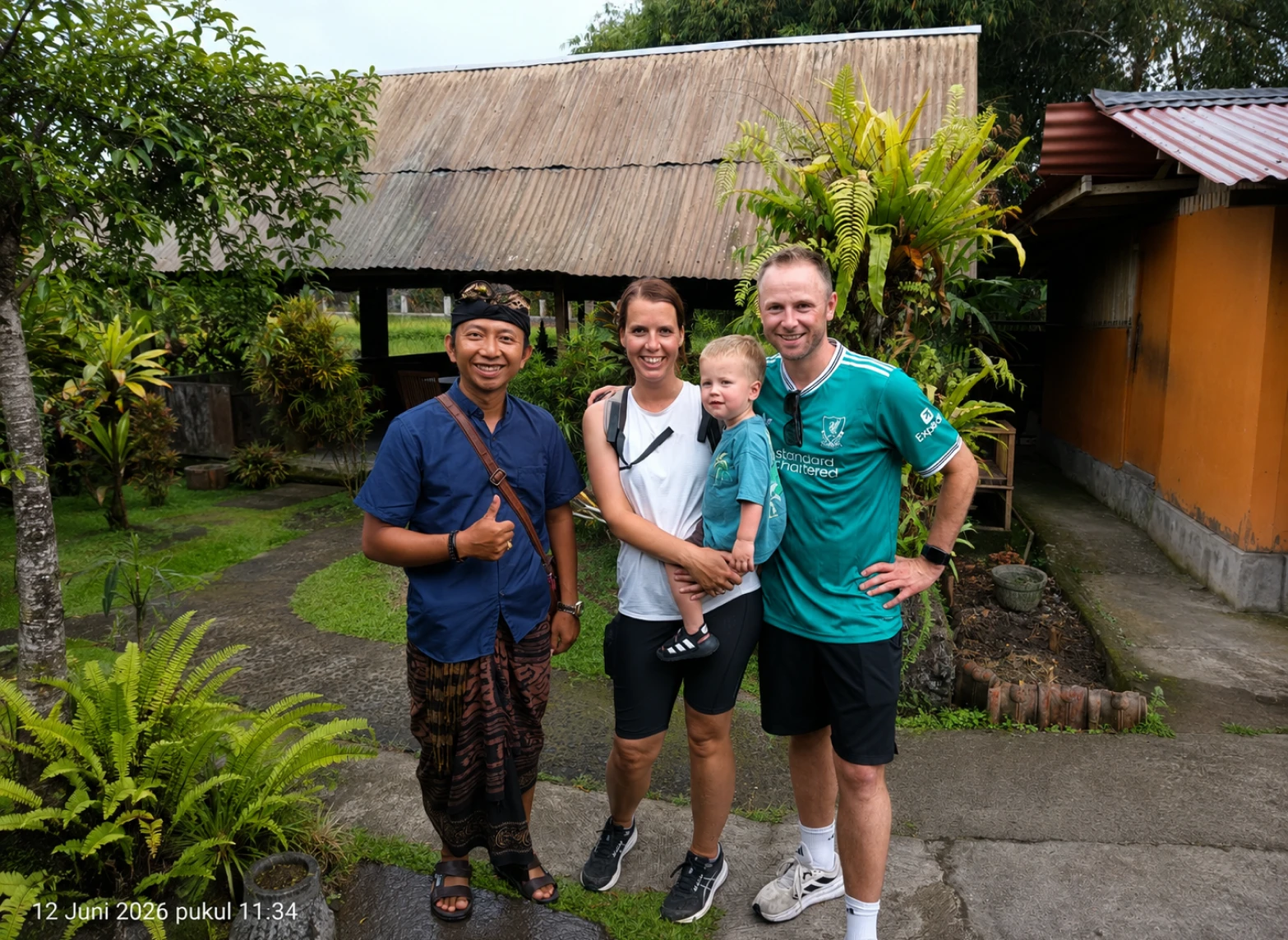
One of the most distinctive features of a Balinese village is the traditional family compound.
Unlike a single Western-style house, a Balinese compound normally consists of several separate buildings surrounded by a wall. Extended family members may live together within the same compound while sharing important spaces.
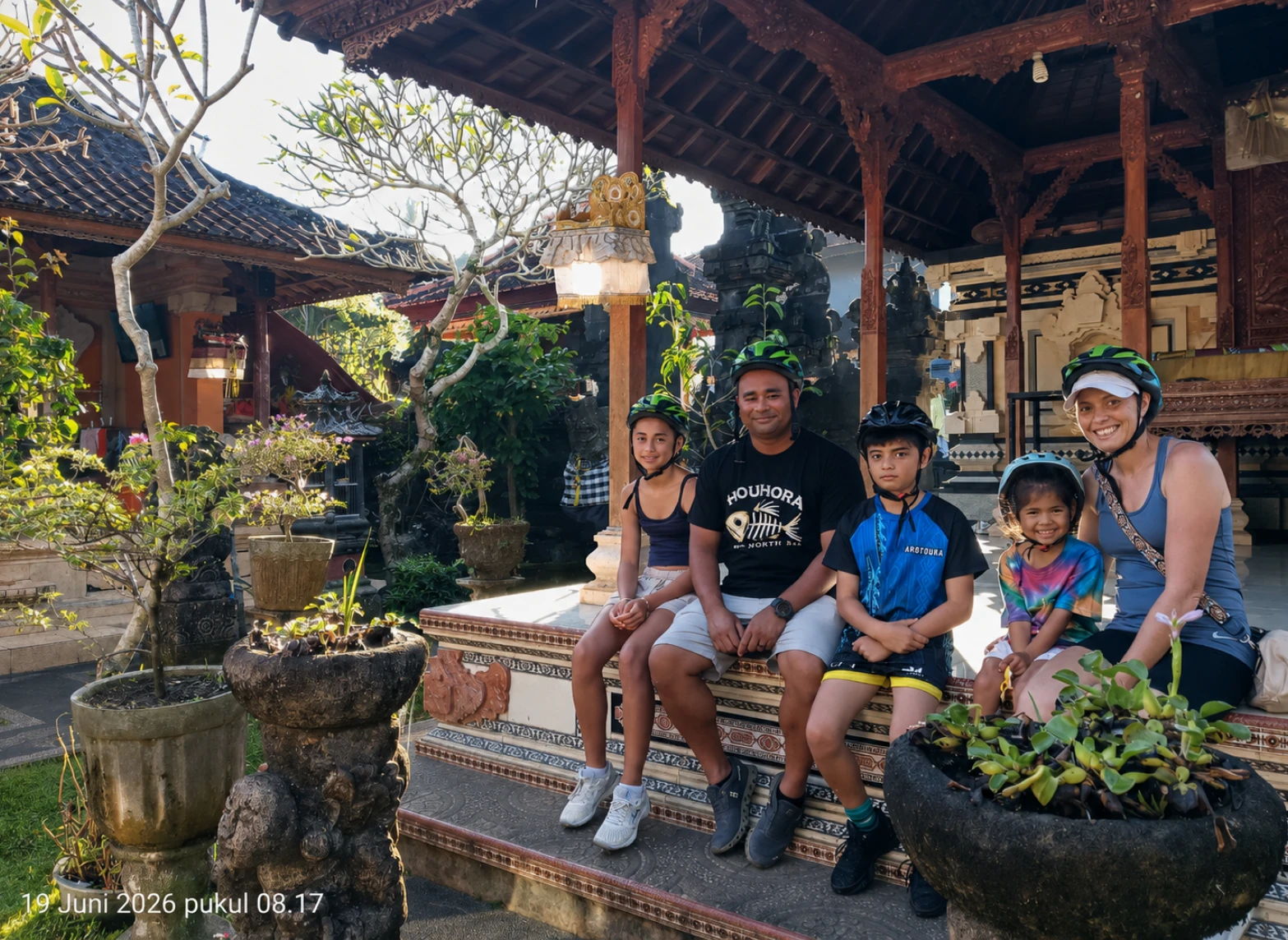
A traditional compound may include:
- A family temple
- Sleeping pavilions
- A kitchen
- A ceremonial pavilion
- An open courtyard
- Areas for daily family activities
The buildings are positioned according to traditional Balinese spatial principles. The most sacred area is generally oriented toward the mountains, while less sacred or practical areas are placed in the opposite direction.
The family temple is especially important. This is where family members place offerings, pray, and honor their ancestors.
Daily Offerings and Spiritual Life
Spirituality is part of everyday life in a traditional Balinese village.
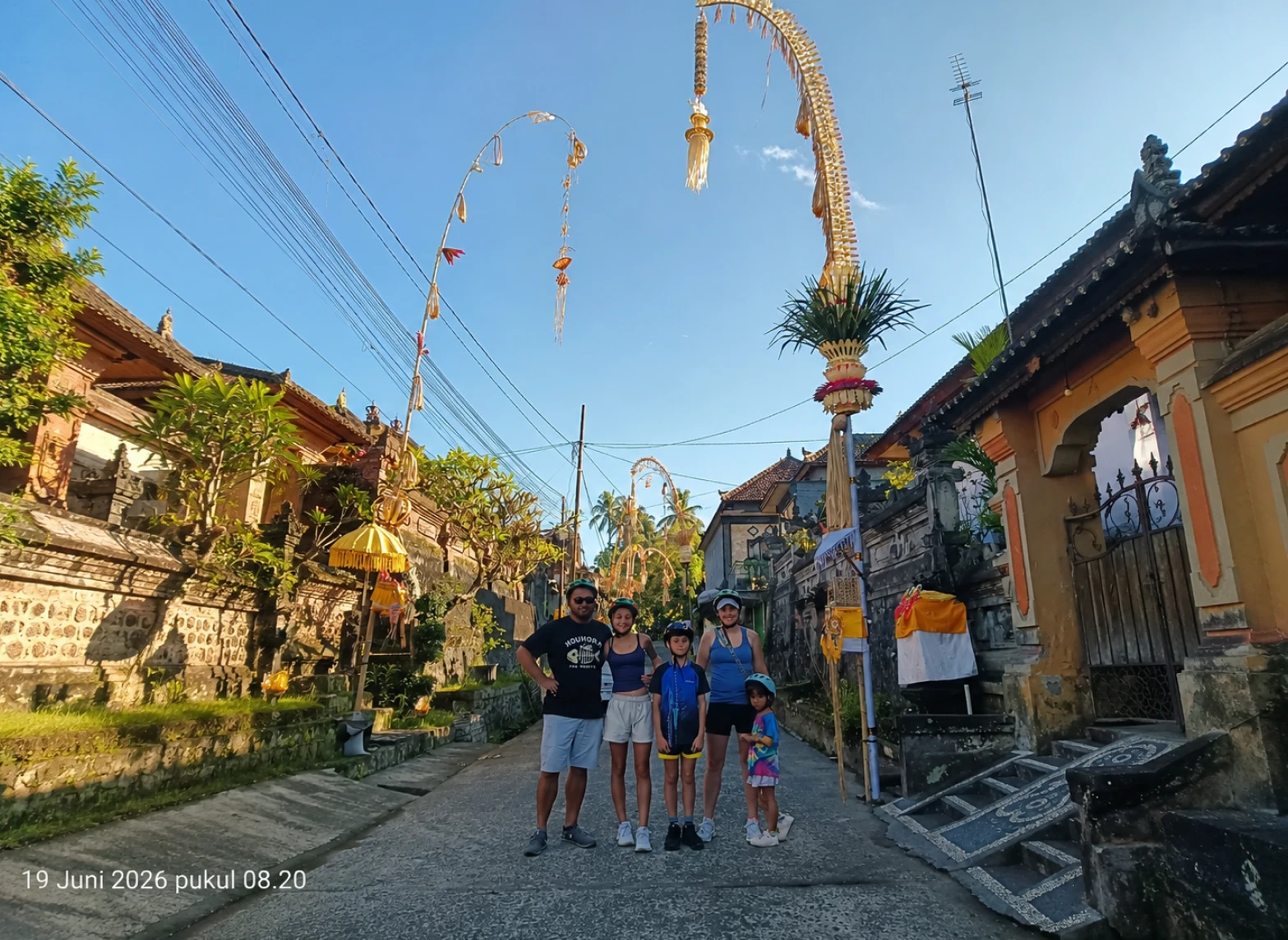
Small offerings called canang sari are prepared from palm leaves, flowers, rice, and incense. You may see them placed in family temples, at entrances, beside roads, in rice fields, and near local businesses.
These offerings are an expression of gratitude and a way to maintain balance between the spiritual and physical worlds.
Temple ceremonies also play an important role in village life. On certain days, villagers wear traditional clothing, carry offerings, prepare food together, and gather for prayer.
Visitors cycling through a village may occasionally see colorful decorations, ceremonial processions, or families preparing for an important religious occasion. These moments are not staged for tourists—they are a genuine part of everyday Balinese culture.
Daily Offerings and Spiritual Life
Spirituality is part of everyday life in a traditional Balinese village.
Small offerings called canang sari are prepared from palm leaves, flowers, rice, and incense. You may see them placed in family temples, at entrances, beside roads, in rice fields, and near local businesses.
These offerings are an expression of gratitude and a way to maintain balance between the spiritual and physical worlds.
Temple ceremonies also play an important role in village life. On certain days, villagers wear traditional clothing, carry offerings, prepare food together, and gather for prayer.
Visitors cycling through a village may occasionally see colorful decorations, ceremonial processions, or families preparing for an important religious occasion. These moments are not staged for tourists—they are a genuine part of everyday Balinese culture.
The Role of Village Temples
Traditional Balinese villages normally have several community temples, each serving a different spiritual purpose.
The three principal village temples are collectively known as Kahyangan Tiga:
- Pura Desa, connected with the village community and creation
- Pura Puseh, associated with the village’s origins and ancestors
- Pura Dalem, connected with transformation and the cycle of life
There may also be smaller temples near rice fields, water sources, crossroads, and family compounds.
When visiting a temple area, travelers should respect local customs. Appropriate clothing may be required, and some areas may only be entered during particular ceremonies or with permission from local people.
Banjar: The Heart of Community Life
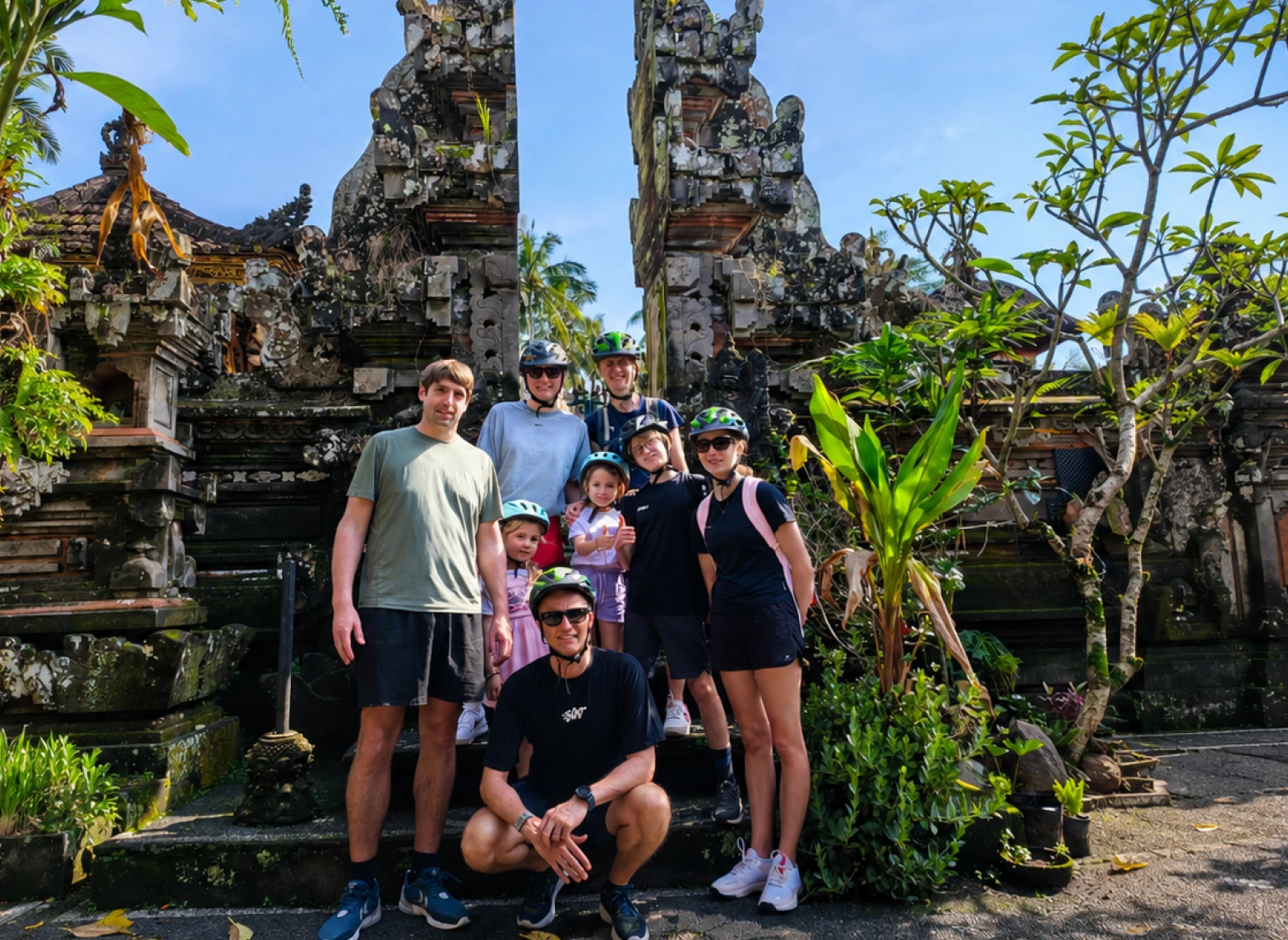
A traditional village is usually divided into local community groups called banjar.
The banjar helps organize ceremonies, community meetings, cultural activities, mutual assistance, and important village decisions. Its meeting pavilion is often one of the most active places in the community.
When a family holds a wedding, temple ceremony, cremation, or another significant event, neighbors usually work together. Some prepare food, others arrange decorations, manage equipment, or assist with the ceremony.
This spirit of cooperation is known as gotong royong. It is one reason village communities in Bali remain closely connected.
Agriculture has shaped Balinese village life for centuries. Around Ubud, rice fields are not only scenic landscapes—they are productive farmland and an important part of the local culture.
Many rice fields are managed through the traditional Subak irrigation system. Subak allows farmers to share water, coordinate planting schedules, maintain canals, and make decisions collectively.
Its role extends beyond agriculture. Water temples, religious ceremonies, environmental knowledge, and community cooperation are all connected to the system.
A Subak cycling tour offers a closer look at how this traditional system remains part of everyday village life. As you cycle through the countryside, you may see farmers preparing the soil, planting young rice, maintaining irrigation channels, or harvesting mature crops. The appearance of the fields changes throughout the year, so every visit can offer a different view of village agriculture.
Respectful Ways to Visit a Balinese Village
Traditional villages are living communities rather than tourist attractions. Visitors are welcome in many areas, but it is important to explore respectfully.
A few simple principles can help:
- Dress respectfully, particularly near temples.
- Do not enter private family compounds without permission.
- Ask before photographing people or ceremonies.
- Avoid touching offerings placed on the ground.
- Follow the instructions of your local guide.
- Slow down when passing residents, animals, and ceremonial activities.
- Keep the village clean and avoid leaving waste behind.
Traveling with a local guide can make the experience more meaningful. A guide can explain what you are seeing, introduce local customs, and help ensure that your visit respects the community.
Traditional Skills and Local Livelihoods
Life in Balinese villages includes many skills and livelihoods beyond rice farming.
Depending on the area, local families may work with:
- Wood carving
- Stone carving
- Silverwork
- Painting
- Bamboo weaving
- Coconut and tropical crops
- Coffee, cacao, cloves, and fruit
- Traditional food preparation
These activities are often connected with the natural environment and knowledge passed between generations.
Not every village is the same. Each community has its own character, landscape, temples, livelihoods, and local stories.
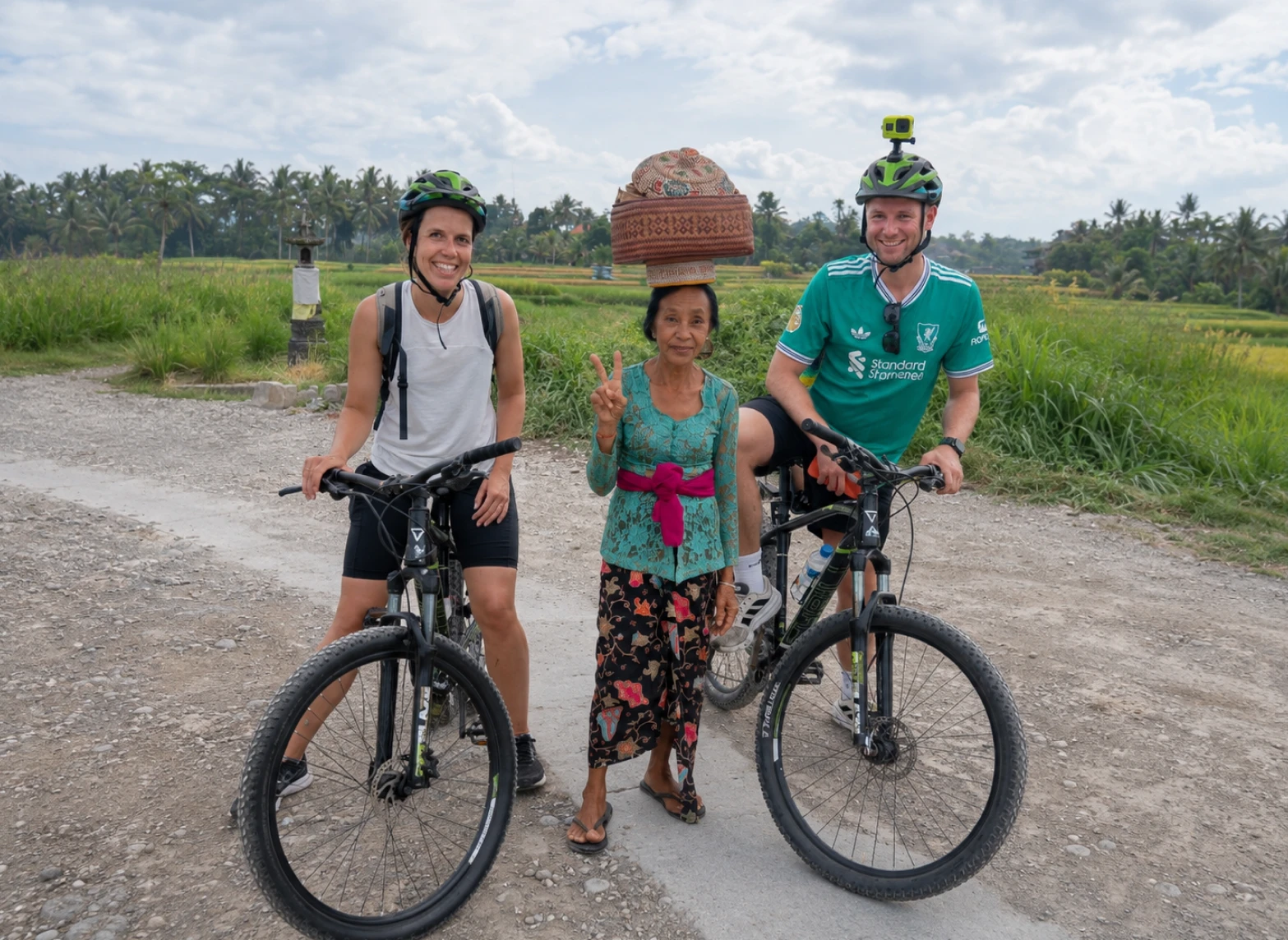
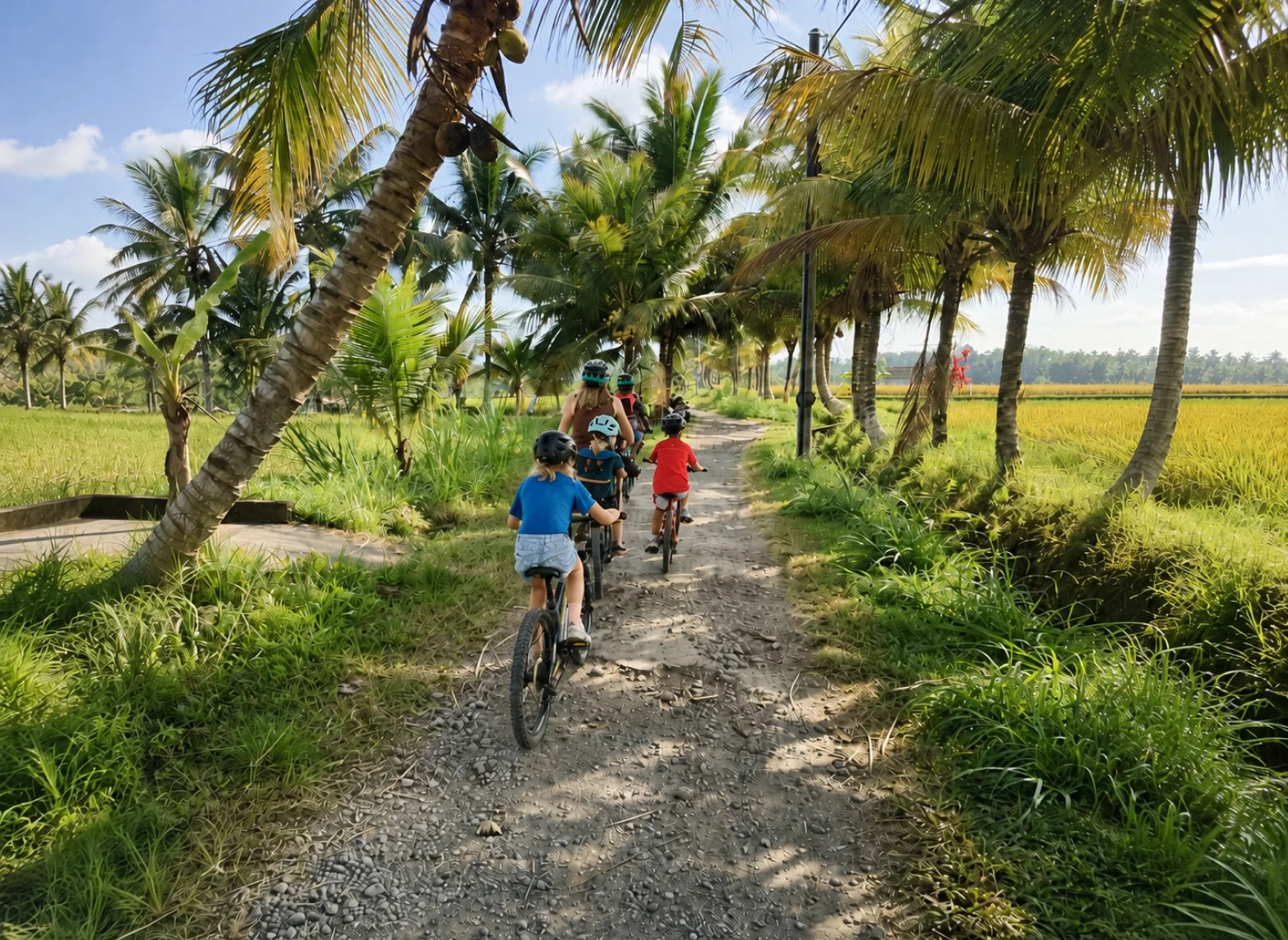
Cycling allows you to experience village life slowly and naturally. When cycling through Ubud’s villages, you can hear temple music, notice small family shrines, greet local residents, and observe farmers working beside the road. Unlike travelling by car, you can stop whenever something interests you and explore quiet countryside roads that larger vehicles often pass by.
Our Ubud village bike tour follows peaceful village roads through rice fields and traditional communities. The experience is private and guided by local Balinese people who grew up in the surrounding area.
The purpose is not simply to cycle through beautiful scenery. It is to help visitors understand the relationship between the village, its people, the rice fields, spiritual traditions, and everyday life.
Why Cycling Is a Meaningful Way to Explore Village Life
Experience the Living Culture of Ubud
Traditional Balinese villages reveal a quieter and more meaningful side of Bali.
Behind every family compound, temple, rice field, and daily offering is a system of values that connects people with their ancestors, their community, and the natural environment.
Exploring these villages with patience and respect allows travelers to appreciate Bali as a living culture—not just a holiday destination.
If you would like to experience this quieter side of Bali at a relaxed pace, join our Ubud Cycling Tour and ride through ubud village, peaceful rice fields and surrounding local communities.
