
- SUBAK CYCLING · BALI
Subak Cycling Ubud: Discover Bali’s Living Rice Field Culture
A Subak cycling tour in Ubud is more than a bicycle ride through beautiful rice fields. It is an opportunity to discover how Balinese farmers share water, care for their land, and maintain traditions that have shaped Bali’s countryside for generations.
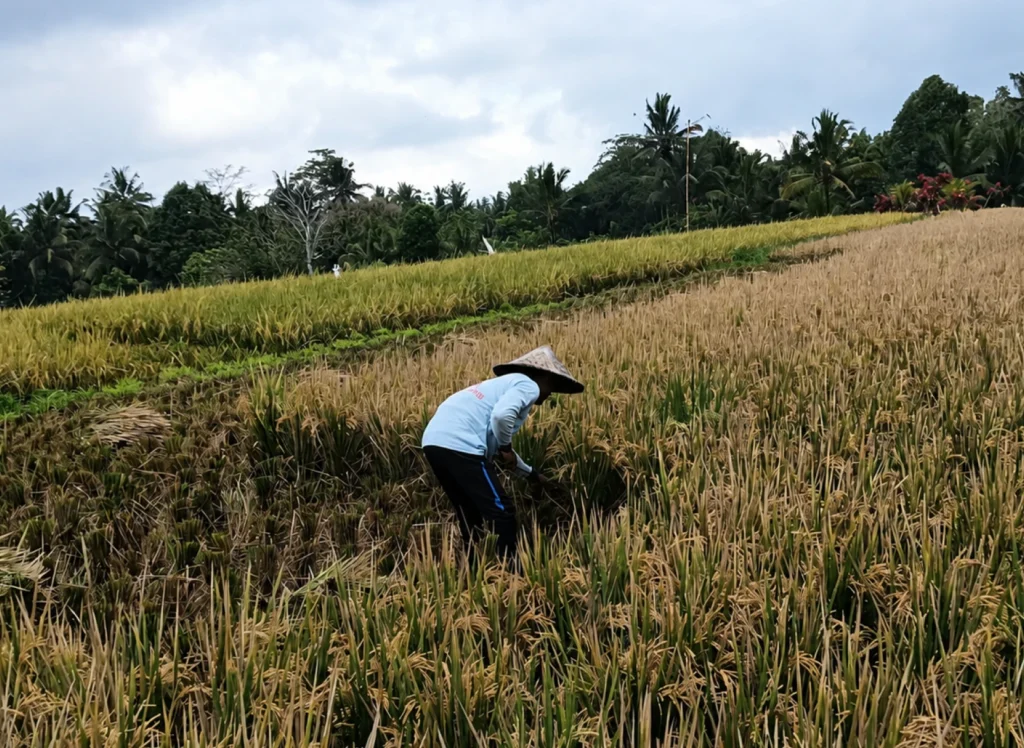
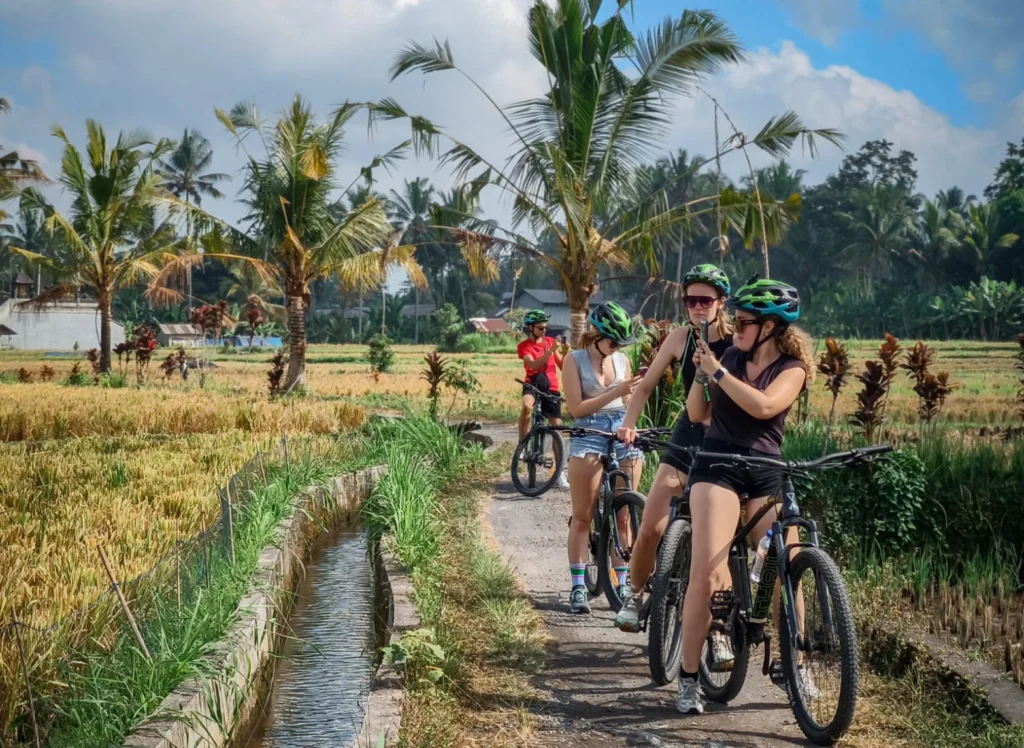
While cycling through the villages around Ubud, you can see irrigation channels flowing beside the road, farmers working in their fields, small agricultural temples, and different stages of the rice-growing cycle.
Travelling by bicycle allows you to experience this landscape slowly. You can stop, observe, take photographs, and learn about the relationship between the rice fields, the local community, and the traditional Subak system.
What Is Subak?
Subak is Bali’s traditional cooperative water-management system. It helps groups of farmers distribute water fairly between connected rice fields.
The system includes more than irrigation channels. It also involves farmers, agricultural land, water sources, community agreements, temples, ceremonies, and shared responsibilities.
Farmers within a Subak organisation work together to decide:
- How irrigation water is distributed
- When fields are prepared and planted
- How waterways are maintained
- How agricultural problems are managed
- When ceremonies connected to farming are held
Water does not simply belong to the farmer whose field is closest to the source. It must continue flowing so that other fields can also receive enough water.
This cooperation is one reason Subak remains an important part of Balinese cultural and agricultural life.
Subak and Tri Hita Karana
The philosophy connected to Subak is known as Tri Hita Karana, which describes harmony among three important relationships:
- Parahyangan: Harmony between people and the spiritual world
- Pawongan: Harmony among people and the community
- Palemahan: Harmony between people and nature
These relationships can be observed throughout the agricultural landscape.
Farmers cooperate with one another, respect natural water sources, and hold ceremonies at temples connected to farming and irrigation. This means that the rice fields are not only places where food is produced—they are also part of Bali’s community and spiritual life.
The cultural landscape of Bali’s Subak system was inscribed on the UNESCO World Heritage List in 2012. UNESCO describes it as a cooperative system of canals and weirs connected to water temples and the philosophy of Tri Hita Karana. You can learn more from the UNESCO World Heritage Centre.
It is important to understand that not every rice field in Bali is individually located inside the UNESCO-listed area. However, Subak organisations and their traditional principles can be found across many agricultural communities in Bali.
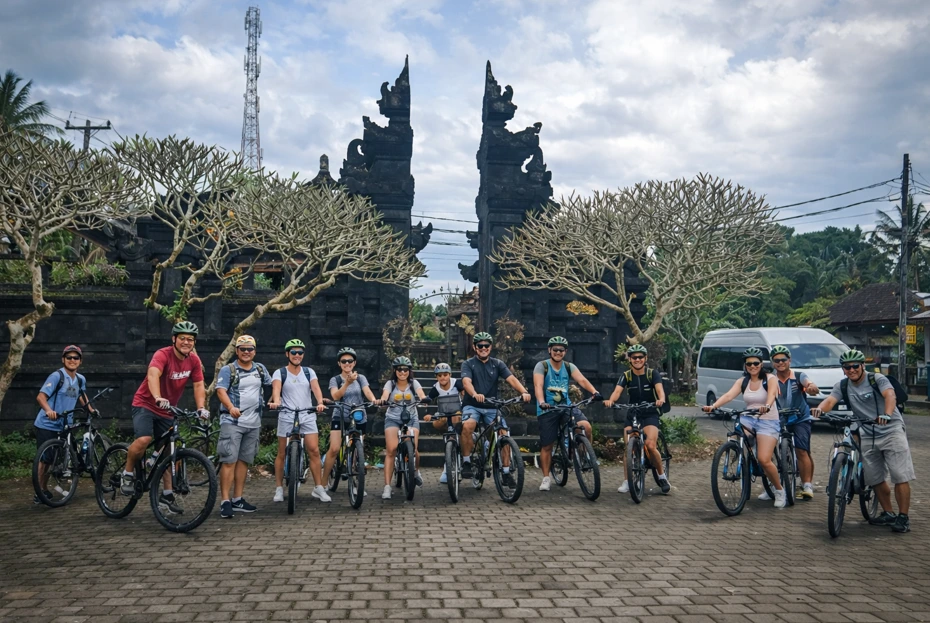
Parahyangan: Harmony between people and the spiritual world
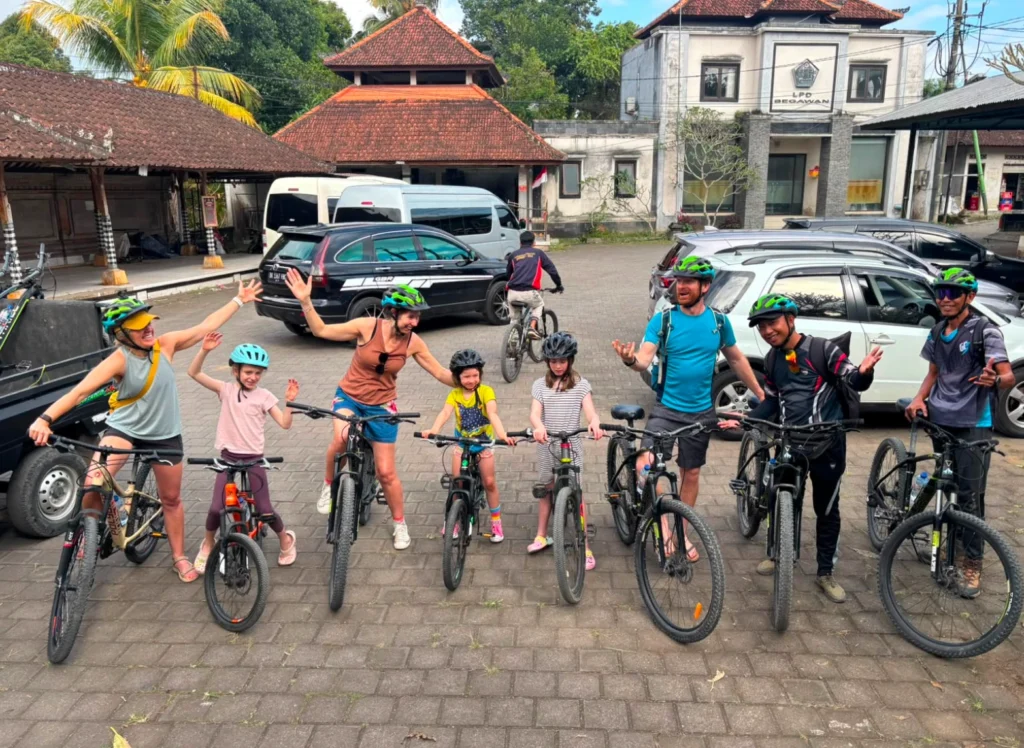
Pawongan: Harmony among people and the community
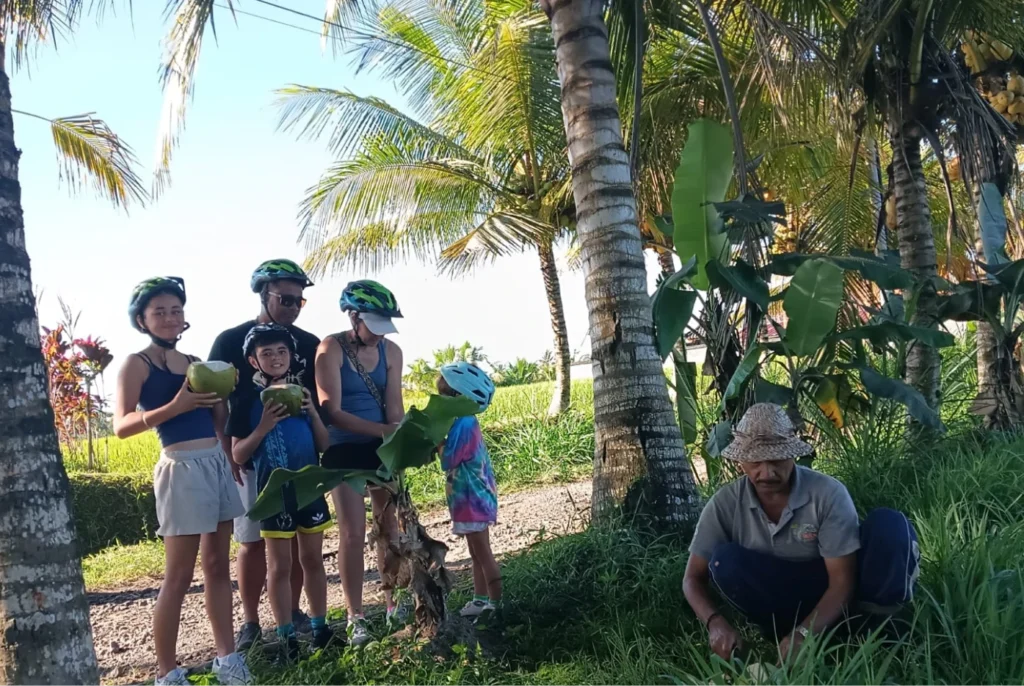
Palemahan: Harmony between people and nature
What Will You See During a Subak Cycling Ubud?
The scenery changes depending on the season, local farming schedule, and stage of rice cultivation.
During the tour, you may see:
- Water flowing through small irrigation channels
- Farmers preparing muddy fields
- Young rice plants being planted by hand
- Bright green rice fields
- Mature golden rice ready for harvesting
- Farmers cutting and collecting rice
- Ducks feeding in recently harvested fields
- Small shrines and temples connected to agriculture
Every stage is part of the real farming cycle. Green fields are beautiful, but newly prepared or recently harvested fields are equally important for understanding how the landscape functions.
Because local farmers may follow different planting schedules, neighbouring rice fields can have completely different colours and conditions.
A car can take you past the rice fields, but cycling allows you to experience the landscape more closely.
You can hear water moving through the irrigation channels, feel the cooler air around the fields, greet farmers, and stop when your guide notices something interesting.
Cycling is also well suited to small village roads and narrow countryside paths that are difficult to explore using a larger vehicle.
A Subak cycling experience gives you:
- A slower and more personal way to explore
- More opportunities to interact with local people
- Access to peaceful village roads
- Time to understand the agricultural landscape
- Gentle physical activity surrounded by nature
- Opportunities for natural countryside photography
Our private cycling tour in Ubud is not organised as a race. The experience is designed for you to enjoy the village, learn about the local culture, and cycle at a pace that feels comfortable for your group.
A Private Route Through the Ubud Countryside
Our private cycling in Ubud experience travels through the countryside around Tegallalang and Begawan village.
Instead of concentrating on the busy roads around central Ubud, the route prioritises quieter village roads, rice fields, and local community areas.
The route consists of approximately:
- 50% flat sections
- 25% gentle downhill sections
- 25% uphill sections
There is also one short off-road section. Guests who do not feel confident can walk their bicycles while the guide provides assistance.
Because the tour is private, the pace can be adjusted according to your family’s experience and comfort.
More Than a Rice Field Photo Stop
Many visitors come to Ubud to photograph its famous rice terraces. However, visiting the Subak landscape should involve more than taking a quick photograph.
A helpful local experience explains:
- Where the irrigation water comes from
- How water moves between the fields
- Why farmers need to cooperate
- How rice is planted and harvested
- Why small shrines are located near agricultural land
- How village life remains connected to farming
When local farming activities are taking place, your guide may explain what the farmers are doing. Interaction must remain respectful because the rice fields are active workplaces rather than staged tourist attractions.
Guests should avoid entering planted fields without permission, blocking irrigation channels, or disturbing farmers while they are working.
Visiting a Traditional Balinese Family Compound
The cycling experience also includes a visit to a traditional Balinese family compound.
A Balinese home is usually arranged differently from a modern Western house. Rather than placing every room inside one building, a traditional compound contains several separate structures positioned around a central courtyard.
During the visit, you may learn about:
- The family temple or Merajan
- The central courtyard or Natah
- Traditional family pavilions
- The position of the kitchen
- Ceremonial areas
- Daily life within an extended family compound
This visit helps explain the connection between the rice fields, the village community, and Balinese family life.
Is Subak Cycling Suitable for Children?
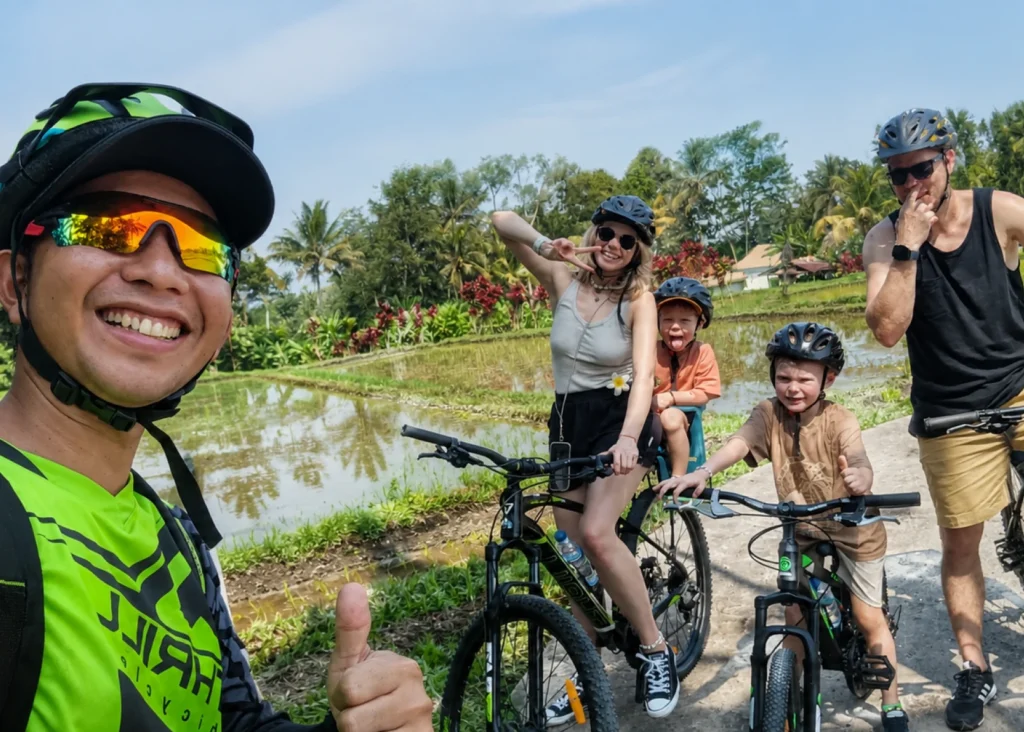
Yes, our private Subak cycling experience can be adjusted for families with children.
Every child has a different level of experience. Some children cycle regularly, while others may feel uncertain on hills or unfamiliar countryside paths.
Before beginning the tour, children can test their bicycles. We prepare the equipment according to their age, height, and cycling ability.
Available equipment includes:
- Child seats for toddlers
- Small bicycles for younger children
- Kids’ bicycles in different sizes
- Mountain bikes for teenagers and adults
- Helmets for every participant
A support vehicle follows the group wherever the route is accessible by car. A tired child or adult can rest in the vehicle and rejoin the ride later on a suitable section.
The guide can also recommend walking through a short section when that is the safer and more comfortable option.
What Is Included?
Our standard private cycling tour includes:
- Private hotel pickup and drop-off
- Private local cycling guide
- Mountain bicycle
- Children’s bicycle or child seat when requested
- Helmet and safety briefing
- Drinking water
- Support vehicle
- Insurance
- Traditional Balinese house visit
- Cycling through village and Subak landscapes
- Indonesian lunch
Vegetarian food can be arranged. Please tell us in advance if anyone in your family has allergies or special dietary requirements.
The temperature is usually cooler, village roads are quieter, and farmers may already be beginning their daily activities. For families with children, a morning tour is often the most comfortable option.
Our usual morning schedule is:
- Pickup between 7:30 AM and 8:30 AM
- Cycling starts between 8:00 AM and 9:00 AM
- Cycling for approximately two to three hours
- Indonesian lunch after the ride
Afternoon cycling is also available. It offers softer light and a peaceful countryside atmosphere, but the weather can be less predictable, particularly during the rainy season.
Bali’s weather can change quickly, even during the dry season. A short rain shower does not always mean the tour must be cancelled.
Our rain procedure includes:
- Providing raincoats when necessary
- Continuing during light rain when conditions are safe
- Stopping in a sheltered place during heavy rain
- Resuming when the rain becomes lighter
- Adjusting the route if conditions require it
Light rain can make the countryside feel fresh and bring out the natural colours of the rice fields. Safety always remains the priority, and the local guide will decide whether the route is comfortable to continue.
How to Experience Subak Respectfully
The Subak landscape is part of a living community. The fields provide income and food for local families, while temples and shrines have religious significance.
Visitors can help protect this environment by following a few simple principles:
- Follow the local guide’s instructions
- Do not enter rice fields without permission
- Avoid stepping on crops
- Never block or damage irrigation channels
- Dress respectfully when visiting temples or family compounds
- Ask before photographing local people
- Take all rubbish away
- Give farmers enough space to continue working
Choosing a local cycling experience also helps create income for guides, drivers, restaurants, and other small businesses within the community.
Subak cycling in Ubud combines nature, culture, gentle activity, and meaningful local interaction.
Rather than only looking at the rice fields, you gain a better understanding of how water, farming, temples, families, and village cooperation are connected.
Whether you are travelling as a couple, with friends, or with children, a private tour gives you enough time to cycle comfortably and experience the countryside without being rushed.
Seeing the Subak landscape from a bicycle offers a closer look at everyday life in Bali. You can experience it with a local guide on our Ubud cycling tour.
OUR PACKAGE
